

How 7 Steps to Achieve Emotional Balance Gaia
Introduction
Are you feeling overwhelmed, stressed, or disconnected? Finding emotional balance can seem like chasing shadows. With emotional balance gaia as your guiding principle, you can tap into the Earth’s wisdom and restore inner harmony. By integrating emotional balance gaia practices into daily life, you’ll cultivate calm, resilience, and joy—no matter how busy or challenging your days become.
In this comprehensive guide, you’ll discover seven transformative steps rooted in science, nature, and mindfulness. Whether you’re a busy parent, a driven professional, or a curious student, these strategies will help you embrace serenity and reclaim your emotional equilibrium.
In a fast-paced world filled with constant demands, achieving emotional balance has become essential for a healthy and fulfilling life. True emotional harmony begins when we slow down, reconnect with ourselves, and nurture our inner world. By prioritizing emotional wellbeing,
We learn how to find calm, release emotional tension, and embrace serenity in our daily lives. Inspired by the wisdom of nature, balance with Gaia invites us to align our emotions with natural rhythms, grounding ourselves in mindfulness, gratitude, and self-awareness. When we cultivate this connection, we open the door to lasting emotional peace, allowing us to respond to life with clarity, resilience, and inner strength.
Table of Contents

The Bigger Picture
In today’s fast-paced world, anxiety and emotional turbulence are on the rise. According to the World Health Organization, rates of depression and anxiety disorders have increased by over 25% in the last decade.
Yet across cultures, people have long turned to the Earth—Gaia—for solace and stabilization. Modern research in ecotherapy and environmental psychology shows that spending time in natural settings can significantly reduce cortisol levels, boost mood, and enhance emotional resilience.
By weaving emotional balance gaia into our routines, we honor both ancient wisdom and cutting-edge science, cultivating inner harmony while nurturing our planet.
Step 1: Cultivate Mindful Awareness
Introducing mindfulness is the foundation of emotional balance gaia. When you observe thoughts and feelings without judgment, you create a gap between stimulus and response.
How It Works
- Mindfulness engages the prefrontal cortex, improving emotional regulation.
- Regular practice strengthens neural pathways for calm and focus.
Practical Tips
- Start with 5-minute daily meditations—use apps like Insight Timer or Calm.
- Incorporate “mindful moments”—pause to feel your breath before meals, meetings, or transitions.
- Journal observations to track triggers and breakthroughs.
Parents can practice mindfulness with kids by doing a simple “five senses check-in.” Professionals can schedule short breathing breaks between meetings. Students can set a timer during study sessions to reset and refocus.
Step 2: Embrace Nature’s Wisdom for Emotional Balance Gaia
Gaia offers endless lessons on resilience and cycles. By intentionally connecting with nature, you sync your rhythms with the Earth’s.
Why It Matters
- Grounding (earthing) can lower blood pressure and reduce inflammation.
- Green spaces increase feelings of well-being and social cohesion.
Practical Ideas
- Take barefoot walks on grass, sand, or soil for 10 minutes daily.
- Garden or nurture indoor plants—observe their growth as a metaphor for your own emotional journey.
- Practice forest bathing (Shinrin-yoku): immerse all senses in a woodland environment.
Step 3: Practice Breathwork Techniques
Breath is the bridge between mind and body. Controlled breathing can rapidly shift your emotional state.
Key Methods
- Box Breathing: Inhale 4, hold 4, exhale 4, hold 4.
- 4-7-8 Technique: Inhale 4, hold 7, exhale 8.
- Alternate Nostril Breathing (Nadi Shodhana): balances left/right hemispheres.
Implementation Tips
- Practice morning and evening to set daily tone and unwind.
- Use a breathing app or guided video for structure.
- Combine breathwork with visualization: imagine roots growing from your feet into the Earth.
Step 4: Nourish Body and Soul
Diet and emotional health are deeply intertwined. Whole foods, hydration, and mindful eating foster stable moods and energy.
Essential Nutrients
- Omega-3 fatty acids (from flaxseed, walnuts, wild-caught fish) support neurotransmitter function.
- Magnesium (leafy greens, nuts, seeds) calms the nervous system.
- Probiotics (fermented foods) enhance gut-brain communication.
Recipe Inspiration
Professionals can prep mood-boosting snacks (trail mix with dark chocolate). Students can swap sugary drinks for infused water (mint, cucumber).
Step 5: Create Sacred Spaces for Emotional Balance Gaia
Your environment influences your inner world. Designing dedicated areas for reflection strengthens emotional stability.
Setting Up
- Choose a quiet corner, declutter, and add elements from nature—stones, shells, plants.
- Incorporate soothing colors: earth tones, greens, soft blues.
- Use natural light or warm, dimmable lighting for evening rituals.
Personalization
- Parents can include children’s artwork to foster family harmony.
- Professionals might add an essential-oil diffuser with grounding scents like cedarwood.
- Students can pin inspiring quotes or vision boards above a small meditation cushion.
Step 6: Connect with Gaia Through Movement
Embodied practices like yoga, qi gong, and mindful walking activate body awareness and emotional release.
Movement Practices
- Grounding Yoga Sequences: Focus on standing postures like Mountain Pose, Tree Pose.
- Qi Gong: Gentle flows that cultivate life force (qi) through breath and intention.
- Mindful Walking: Slow, deliberate steps synchronized with your breath.
Tips for Consistency
- Schedule short sessions (10–15 minutes) daily.
- Practice outdoors whenever possible to deepen the Gaia connection.
- Join community classes—online or in-person—for accountability and support.
Step 7: Integrate Reflective Rituals
Rituals mark transitions and reinforce positive habits. They give emotional work a sacred container.
Examples of Rituals
- Lighting candles at dawn and dusk to honor day/night cycles.
- Writing gratitude lists and releasing intentions into a bowl of water or earth.
- Performing a monthly full-moon ceremony: meditate, journal, and plant seeds.
Why Rituals Work
Rituals engage the brain’s reward centers, boosting dopamine and creating a sense of meaning. They also connect you to ancestral and Earth-based traditions, reinforcing the power of emotional balance gaia.
Common Mistakes to Avoid with Emotional Balance Gaia
Even well-intentioned practices can backfire. Here are 4 pitfalls and how to sidestep them:
- Overloading Your Routine: Trying all strategies at once can overwhelm. Start small—one step at a time.
- Neglecting Rest: Rest is as crucial as active practice. Schedule downtime to integrate new habits.
- Forgetting Community: Isolation can erode motivation. Share your journey with friends or online groups.
- Chasing Perfection: Emotional balance isn’t a final destination. Embrace ups and downs as part of growth.
Advanced Tips for Deepening Emotional Balance Gaia
- Sound Healing: Use Tibetan singing bowls or tuning forks to shift energy.
- Energy Mapping: Explore chakra journaling—note emotional blocks and their physical correlates.
- Eco-Therapy Retreats: Plan immersive experiences in nature to accelerate inner work.
- Conscious Breath Ceremonies: Join guided breathwork circles for group synergy.
Tools, Resources, and Product Suggestions
- Insight Timer App – Free guided meditations for all levels.
- Earthing Mat – Brings grounding benefits indoors.
- Organic Essential Oils (lavender, cedarwood) – Promote relaxation and focus.
- Forest Bathing Guidebook by Dr. Qing Li – Evidence-based practices for nature therapy.
- Internal Link: Check our post on Mindful Home Tips for Green Living.
Each tool supports emotional balance gaia by reinforcing mind-body connection and Earth awareness. Choose what resonates and fits your lifestyle.
Long-Term Benefits of Emotional Balance Gaia
Embracing these practices leads to profound, lasting change:
- Enhanced Resilience: Better coping with stressors at work or home.
- Improved Relationships: Greater empathy and emotional attunement.
- Physical Well-Being: Lower inflammation, improved sleep, and balanced hormones.
- Environmental Stewardship: Deepened respect for nature fosters sustainable choices.
Within weeks, you’ll notice calmer moods. Over months, these steps integrate into your identity, creating a life aligned with Earth’s cycles and rhythms.

Personalized Scenarios for Emotional Balance Gaia
Busy Parent: Sarah, a mother of two, uses mindful breathing between school pickups to reset her emotions. She journals her gratitude on weekends in a garden nook she created.
Corporate Professional: James integrates 5-minute grounding walks at lunch, wears a grounding bracelet, and hosts monthly eco-lunches to share green-living tips with colleagues.
College Student: Maya starts each study session with a short yoga flow in her dorm hallway and ends the day with a full-moon reflection, jotting down insights in her gratitude journal.
These examples show how anyone can adapt the 7 steps to achieve emotional balance gaia, regardless of schedule or setting.
Step-by-Step Plan for Implementation
Week 1: Foundations
- Day 1–2: Practice 5-minute mindfulness daily.
- Day 3–4: Introduce one breathwork technique.
- Day 5–7: Take two short grounding walks in nature.
Week 2: Expansion
- Start a simple gratitude journal (3 entries/day).
- Create your sacred space—add one natural element.
- Prepare one mood-boosting meal (see our holistic recipes).
Weeks 3–4: Integration
- Add movement practice (yoga or qi gong) 3 times/week.
- Perform a reflective ritual at the full or new moon.
- Assess progress: note emotional shifts and adjust habits.
Use a habit tracker or app to celebrate each win. Share your journey on social media or with a friend for extra accountability.
Conclusion
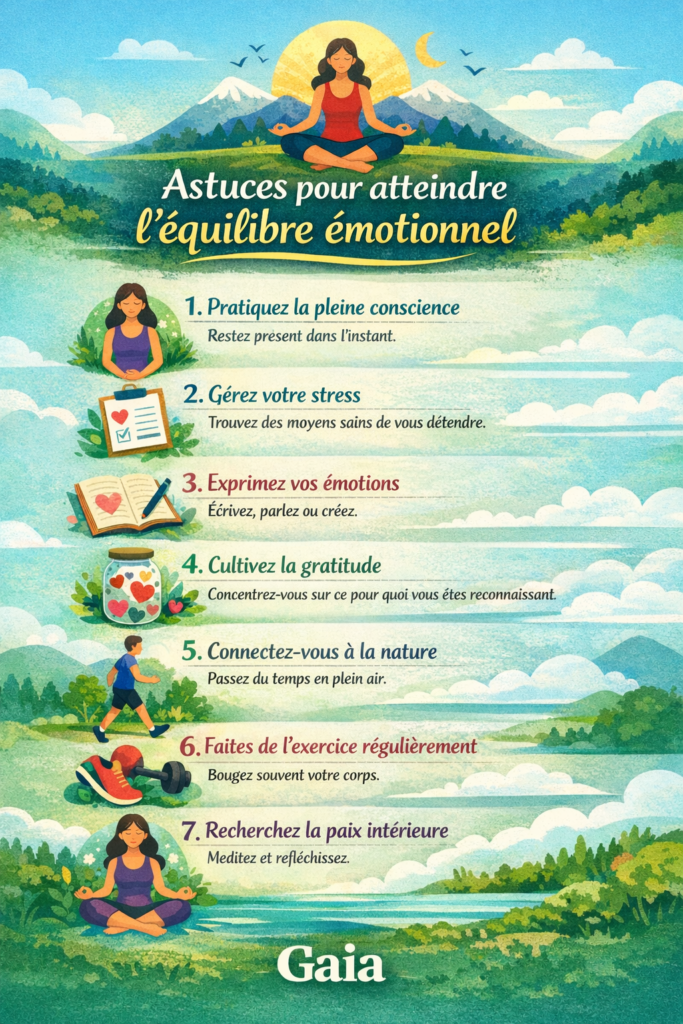
Embracing emotional balance gaia is a journey that honors both scientific insight and Earth’s timeless wisdom. By following these seven steps—mindfulness, nature connection, breathwork, nourishment, sacred spaces, movement, and ritual—you create a resilient foundation for lasting calm and joy.
Start small, stay consistent, and celebrate every moment of growth. Ready to transform your emotional landscape? Share your progress in the comments, subscribe for weekly insights, and explore more on holistic reciphttps://naturalnicehealth.com/natural-stress-relief-2/es to nourish your path.
Achieving emotional balance is not about perfection, but about awareness, compassion, and consistency. When we consciously nurture emotional harmony and protect our emotional wellbeing, we create space to find calm even in challenging moments. By learning to embrace serenity and reconnecting with nature, we rediscover the power of balance with Gaia—a gentle reminder that our emotions, like the natural world, need care and respect. Through mindful practices and daily intention, lasting emotional peace becomes possible, guiding us toward a more grounded, peaceful, and fulfilling life.
FAQs
1. What exactly is emotional balance gaia?
It’s a holistic approach that combines mindfulness, nature connection, and ancient Earth-based practices to stabilize emotions and foster inner harmony.
2. How long before I feel results?
Many people notice subtle shifts—like reduced anxiety or clearer focus—within 1–2 weeks of consistent practice.
3. Can I practice these steps indoors only?
Yes. You can ground with indoor plants, use earthing mats, and practice breathwork and rituals anywhere.
4. Is emotional balance gaia suitable for children?
Absolutely. Simple mindful exercises, gratitude rituals, and nature walks can be adapted for all ages.
5. How do I maintain motivation?
Track small wins, join supportive communities, and personalize practices to fit your lifestyle and interests.
6. Are there any risks?
These practices are low-risk. If you have specific health concerns, consult a professional before trying new breathwork or nutrition changes.