
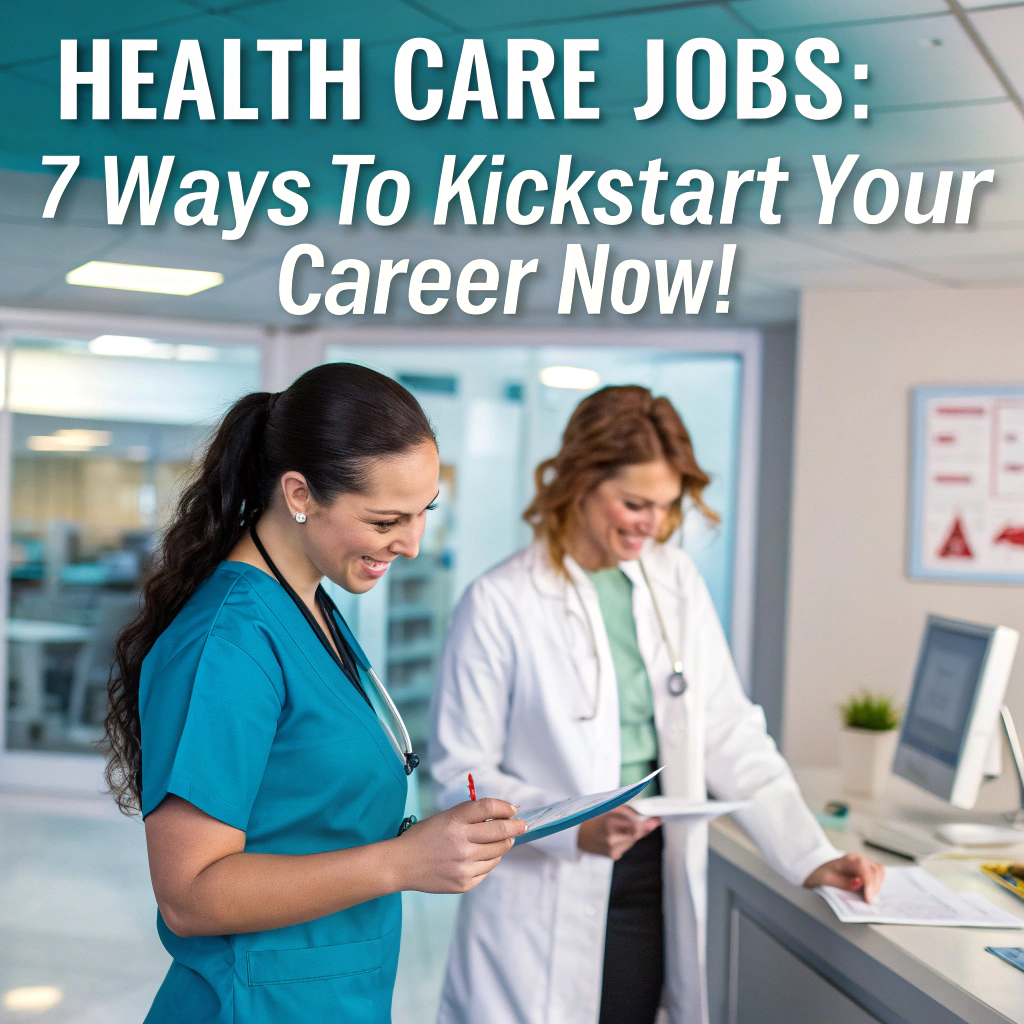
Health Care Jobs: 7 Ways to Kickstart Your Career Now!
Health Care Jobs: 7 Ways to Kickstart Your Career Now!
Introduction
Did you know that employment in health care jobs is projected to grow by 15% from 2021 to 2031, adding over 2 million new roles? If you’re asking yourself how to break into this booming field, you’re in the right place. Health care jobs offer stability, purpose, and the chance to make a real difference in people’s lives. In this comprehensive guide, you’ll find seven actionable strategies to launch—or elevate—your career in healthcare. Whether you’re a recent graduate, mid-career changer, or stay-at-home parent exploring part-time nursing roles, these tips will empower you to move forward with confidence.
The Bigger Picture
Our world is aging, chronic disease rates are climbing, and mental health awareness has skyrocketed. These trends make health care jobs more vital than ever.
• A 2023 WHO report highlights a global shortage of 10 million health workers by 2030.
• The U.S. Bureau of Labor Statistics notes that nursing, allied health, and medical technician roles lead job-growth charts.
• Culturally, patients demand holistic, patient-centered care—fueled by a shift toward green living, emotional wellness, and preventive medicine.
By choosing a career in healthcare, you’re not only ensuring financial security but also joining a movement toward mindful self-care, community health, and sustainable living.
Table of Contents
1. Define Your Why: Align Passion with Health Care Jobs
H3: Identify Your Core Motivation
Everyone’s journey into healthcare is unique. Start by asking:
- What excites me—saving lives, teaching healthy habits, or managing wellness programs?
- Which patient population inspires me—children, seniors, or mental-health clients?
H3: Translate Passion into a Career Path
Once you know your “why,” map it to a role:
- Love hands-on care? Consider nursing or medical assisting.
- Passionate about nutrition? Look at dietitian or wellness coaching.
- Drawn to technology? Explore health informatics or telemedicine.
H3: Practical Tip
Create a vision board or journal your top three healthcare values. Refer back to it when choosing courses or applying for health care jobs.
2. Acquire Essential Education and Credentials
H3: Choose the Right Program
- Certificate vs. Degree: Short-term certificates can land you pharmacy tech or phlebotomy roles.
- Associate vs. Bachelor’s: A BSN unlocks nursing leadership; an MPH opens public-health doors.
H3: Leverage Online Learning
Platforms like Coursera and Khan Academy offer prerequisites for nursing school. Some universities now provide hybrid programs—ideal for busy professionals.
H3: Financial Support
- Scholarships from AHNA, AAPA, or local foundations
- Employer-sponsored tuition reimbursement in many hospitals
- Federal aid via FAFSA
3. Gain Hands-On Experience Early
H3: Internships and Clinical Rotations
Clinical hours are non-negotiable in most programs. Go above and beyond by:
- Volunteering at community clinics or free health fairs
- Shadowing RNs, PTs, or lab technologists
- Participating in university research projects
H3: Micro-Volunteering Opportunities
If time is tight, try:
- Health-advice hotlines
- Virtual patient-education sessions
- Community wellness workshops
Real-life example: Maria, a busy mom, started volunteering one afternoon a week at a local hospice. Within three months, she landed a part-time role as a patient care assistant.
4. Networking Strategies for Health Care Jobs
H3: Build a Professional Online Presence
- Optimize your LinkedIn: Include keywords like “health care jobs,” “patient care,” or “clinical operations.”
- Share insights: Post about wellness trends, holistic recipes, or mind-body research.
H3: Attend Industry Events
- Conferences (e.g., HIMSS, ANA)
- Local meetups: Join state nursing associations or allied health chapters.
- Webinars: Many are free and allow Q&A with experts.
H3: Find a Mentor
A mentor can be your compass through licensing exams, tough job interviews, and career pivots. Seek out seasoned professionals via professional associations or alumni networks.
5. Crafting a Stand-Out Resume for Health Care Jobs
H3: Highlight Transferable Skills
Even if you’re new to patient care, you might already possess:
- Communication: Customer-service or teaching roles translate well.
- Attention to Detail: Lab work, data entry, or quality-control experience is gold.
- Empathy: Highlight volunteer or coaching experiences.
H3: Use Metrics and Action Verbs
Instead of “Assisted patients,” write “Supported 15+ daily patients, improving appointment compliance by 20%.”
H3: Tailor for ATS
Most hospitals use Applicant Tracking Systems. Incorporate phrases like “health care jobs,” “clinical experience,” and “patient-centered care.”
6. Specialize with Certifications and Micro-Credentials
H3: High-Impact Certifications
- CPR/First Aid (American Heart Association)
- Certified Nursing Assistant (CNA)
- Medical Assistant (AAMA)
- Pharmacy Technician (PTCB)
H3: Emerging Micro-Credentials
- Telehealth Specialist
- Health Informatics Micro-Masters
- Integrative Nutrition Coach
These badges not only boost your resume but signal lifelong learning—crucial in the fast-evolving healthcare landscape.
7. Embrace Holistic Well-Being in Your Career
H3: Preventing Burnout
Healthcare professionals face high stress. Incorporate:
- Mindfulness practices: 5-minute breathing breaks between shifts
- Green breaks: Step outside for fresh air and nature therapy
- Peer support: Join small accountability groups or staff yoga sessions
H3: Align with Green Living
- Advocate for low-waste practices in clinics
- Educate patients about sustainable nutrition
- Incorporate plant-based snacks into staff breaks
By modeling holistic self-care, you’ll stand out in health care jobs recruitment—and help shape healthier workplaces.
Common Mistakes or Misconceptions
- Assuming any healthcare role is the same
• Why it’s harmful: You may land in a job you dislike.
• Alternative: Research scope of practice and day-to-day duties. - Neglecting soft skills
• Why it’s ineffective: Communication and empathy drive patient satisfaction.
• Alternative: Take a public-speaking or active-listening workshop. - Ignoring ongoing education
• Why it backfires: Credential creep means entry-level today may require advanced skills tomorrow.
• Alternative: Commit to one micro-course per quarter. - Overlooking personal branding
• Why it’s limiting: Recruiters often Google candidates.
• Alternative: Build a clean, professional online footprint.
Advanced Tips, Techniques, or Practices
- Mindset Shift: Adopt a growth mindset—failure is feedback.
- Peer Teaching: Offer to lead a journal club on holistic health topics.
- Custom Adaptation: If you’re a shift worker, batch prep green-living meal kits on days off.
Tools, Resources, or Product Suggestions
• Job Boards: Indeed, Glassdoor, Health eCareers
• Networking Platforms: LinkedIn, Doximity (for clinicians)
• Certification Prep: Kaplan, Udemy mini-courses
• Self-Care Aids:
– Aromatherapy kits (lavender for stress relief)
– Blue-light-blocking glasses for long shifts
– Meditation apps like Headspace or Insight Timer
Internal Links:
• Discover holistic recipes to fuel long shifts: Top 10 Energizing Smoothies
• Mindful self-care tips for busy professionals: Self-Care Sunday Rituals

Long-Term Benefits and Lifestyle Integration
Applying these strategies consistently will yield:
- Physical Gains: Stronger immunity, less fatigue
- Emotional Balance: Lower burnout risk, improved job satisfaction
- Environmental Impact: Less waste, healthier communities
- Professional Growth: Faster promotions, higher earning potential
Short-term wins include nailing interviews and earning certifications. Over time, you’ll build a reputation for excellence and holistic leadership.
Personalized Scenarios or Stories
• Maria, the Busy Parent: Juggled evening CNA classes, used micro-volunteering, now thriving as an ER technician.
• James, Career Changer: Left finance, earned an online BSN, mentors new nurses on work-life balance.
• Lily, Recent Grad: Used telehealth micro-credentials to land a remote case-management role while pursuing her MPH.
Picture yourself in one of these shoes—your next step is closer than you think!
Step-by-Step Plan or Implementation Guide
Week 1–2:
- Define your why; draft your vision board.
- Research 3 target roles and their credential requirements.
Month 1–2:
- Enroll in a certificate or micro-course.
- Update LinkedIn and resume; apply to 5 roles.
Month 3–4:
- Volunteer or shadow for 2–4 hours weekly.
- Attend one industry event; connect with 5 professionals.
Month 5–6:
- Sit for a key certification (e.g., CNA or CPR).
- Apply learned skills in a side project or community workshop.
Ongoing:
- Dedicate 30 minutes weekly to mindfulness or exercise.
- Track applications, certifications, and networking contacts in a simple spreadsheet.

Conclusion
Launching your journey into health care jobs is within your reach. By aligning purpose, gaining credentials, networking smartly, and embracing holistic well-being, you’ll not only secure a role—you’ll thrive in it. Ready to take the first step? Share your progress in the comments, subscribe for more career and wellness tips, or explore our related post on Mindful Self-Care for Healthcare Heroes.
FAQs
Q1: What entry-level health care jobs require minimal schooling?
A1: Consider roles like Certified Nursing Assistant (CNA), Pharmacy Technician, or Medical Assistant—many require 6–12 months of training.
Q2: How can I balance shift work with family life?
A2: Adopt batch-cooking healthy meals, schedule “off-shift” self-care, and set firm sleep routines.
Q3: Are online health care jobs legitimate?
A3: Yes—telehealth, medical coding, and case management roles are increasingly remote. Verify employer credentials.
Q4: What’s the best way to find a mentor in healthcare?
A4: Join professional associations, use LinkedIn to connect with alumni, or attend local chapter meetings.
Q5: How often should I renew my certifications?
A5: It varies—CPR every 2 years, some tech certifications annually. Track expiry dates in a calendar alert.
Q6: Can I switch specialties after starting my career?
A6: Absolutely. Many nurses and allied-health professionals pivot via bridge programs or additional certifications.
Take one step today—your future in health care jobs awaits!